

The Worlds That Fit Inside a Brushstroke
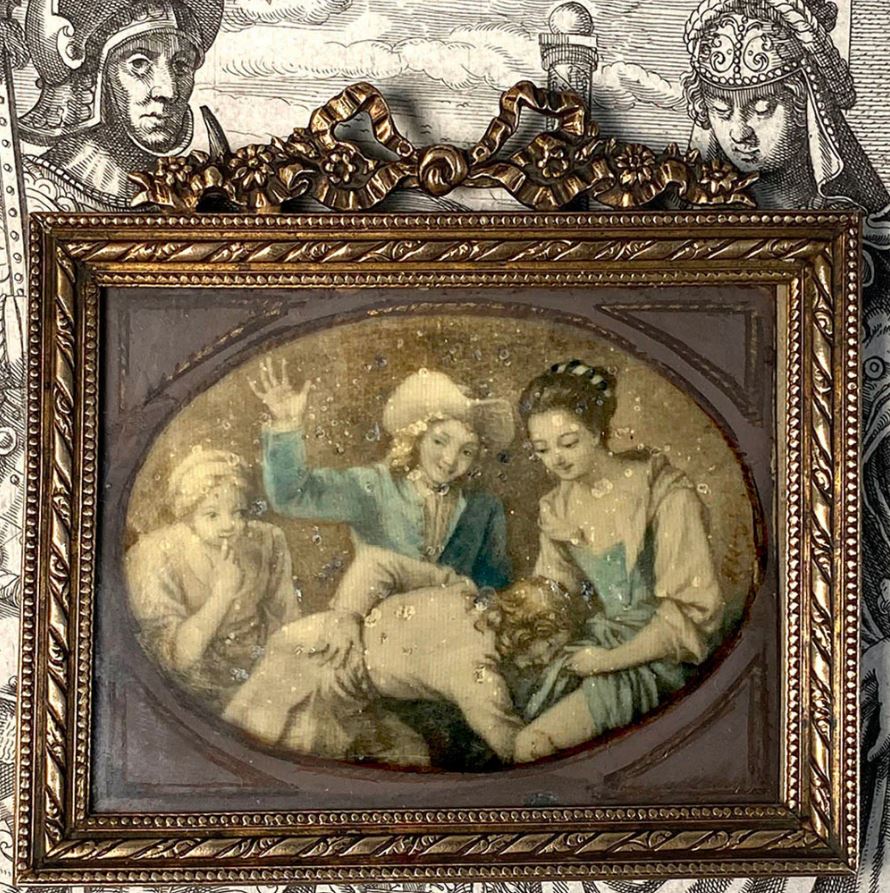
The delicate art of miniature painting, where patience transforms pigment into poetry
The Smallest Window to Infinity
In the stillness of a studio, a painter bends over a canvas no larger than a hand, holding a brush so fine that a single misplaced breath could undo hours of work. Miniature painting demands an intimacy that few other arts require. It invites its creator to look closer, to move inward until the world seems to shrink alongside the subject. What appears tiny to the casual observer becomes vast to the artist, a landscape of fiber and color that holds the entire rhythm of imagination. Within each stroke lies intention, and within each speck of color, the weight of devotion. To paint small is to think expansively, to capture emotion in its most fragile form.
The viewer’s role mirrors that of the painter. One must lean closer, eyes narrowing, breath quieting, to truly see. The experience becomes meditative, almost sacred. Each detail rewards patience, each contour a revelation. A miniature painting is not meant to overwhelm but to invite intimacy. It whispers instead of shouting, relying on precision rather than spectacle. Through this scale, the artist controls perception, proving that beauty does not need grandeur to command awe. The smallest window, when opened with care, can reveal infinity itself.
Origins in Devotion and Empire
The history of miniature painting winds through the corridors of empire and faith. In medieval Europe, monks illuminated manuscripts with intricate images that bordered sacred texts, their colors made from crushed gemstones and gold leaf. These illuminations were not decorations but acts of devotion, prayers rendered in pigment. Meanwhile, in Persia, India, and the Ottoman courts, miniature painting evolved as a form of storytelling that married realism with mysticism. The brush became a bridge between art and scripture, history and mythology. These early painters created entire worlds on parchment, where kings, saints, and lovers lived within frames smaller than a palm.
Each region left its signature upon the form. Persian miniatures favored lyrical motion and dreamlike architecture, while Mughal artists pursued delicate realism and naturalism inspired by European influences. The British colonial period brought another layer, as Eastern and Western techniques intertwined. Miniature painting became both art and document, recording not only the grandeur of courts but also the exchange of culture and identity. Over centuries, the form persisted through change, surviving political upheavals and industrialization. Its endurance speaks to something timeless within human expression, the desire to hold the infinite within the finite.
The Discipline of Precision
Miniature painting is as much about control as it is about creativity. The artist must balance spontaneity with meticulous restraint. Brushes are often handmade from the finest hairs, some drawn from the delicate tips of squirrels or camels, trimmed to a single filament. Pigments are mixed manually, ground to perfection using mineral or organic materials that catch light differently depending on their texture. The surface, often ivory, vellum, or fine paper, must be prepared to accept the paint without absorbing too much moisture. Every choice, from tool to color, affects the final illusion of life.
The process begins not with color but with breath. The painter slows their pulse, aligns vision with patience, and begins the underdrawing. Outlines are faint, guiding rather than constraining. Then comes the layering, each pigment applied in translucent washes that build depth without thickness. The technique requires both delicacy and durability. A single gesture can make or unmake the illusion. The painter must learn to work within the limits of vision, often using magnifying lenses or painting by natural light. The craft rewards humility, reminding its practitioners that mastery is measured not by speed but by stillness.
The Language of Color and Texture
In miniature painting, color carries meaning beyond aesthetics. It becomes language, emotion, and architecture combined. Each hue must harmonize with the others, forming a composition that breathes rather than clashes. Artists often use pure pigments, allowing light to reveal the richness within. Red may signify vitality or sacrifice, blue the presence of the divine, and gold the eternal. These choices are not arbitrary but embedded in centuries of symbolism. The painter must think not only of how a color appears but how it feels when reduced to a scale where a single millimeter can hold an entire story.
Texture, too, is illusion. Since the viewer cannot touch the surface, the painter must simulate tactility through gradient and shadow. The folds of fabric, the softness of skin, or the gleam of armor all emerge through the play of precision and restraint. The challenge lies in making the impossible visible. Every stroke must whisper rather than declare, every layer must suggest rather than define. When done well, the result is seamless. The viewer forgets the material reality of paint and sees instead a living scene suspended between imagination and faith. This is where the miniature transcends its scale and becomes a complete world unto itself.
The Collector’s Eye for Intimacy
Collectors of miniature paintings often speak of connection rather than possession. These works are not meant to dominate a room but to draw one inward. To own a miniature is to inherit a relationship with patience, precision, and vulnerability. Many collectors describe the sensation of holding one as akin to keeping a heartbeat in their hands. The small size demands attention, turning viewing into ritual. Light must be soft, the angle precise, the distance personal. One does not glance at a miniature; one studies it, allowing its details to unfold slowly, like conversation.
The market for miniatures remains both niche and profound. Some collectors pursue historical pieces, tracing the evolution of techniques across dynasties and regions. Others commission modern artists who continue the tradition with new subjects and materials. In either case, the collector becomes a custodian of intimacy. Unlike monumental art, which seeks an audience, the miniature seeks companionship. It does not overwhelm, it invites. For those who understand this quiet dialogue, the value of a miniature painting lies not in prestige but in presence. It becomes a reminder that the most enduring beauty often speaks softly.
Modern Miniaturists and Their Vision
Though rooted in tradition, miniature painting continues to evolve. Contemporary artists reinterpret the form, merging classical techniques with modern themes. Some explore abstraction within small spaces, turning the limitations of size into expressions of conceptual depth. Others reimagine cultural motifs, blending heritage with commentary on identity and modernity. Digital technology has even introduced new possibilities. Some artists use microscopes to paint details invisible to the naked eye, while others adapt the spirit of miniaturization to pixel art and digital renderings. Yet despite these innovations, the core remains unchanged: a devotion to craft and a reverence for time.
Today’s miniaturists stand at the intersection of patience and progress. They preserve what ancient painters knew, that the act of painting small is an act of mindfulness. Every detail requires awareness, every color choice an understanding of harmony. The process resists haste and distraction, offering refuge from the speed of the modern world. Through their work, these artists remind us that scale does not define significance. In an age obsessed with size and spectacle, the miniature reclaims attention, teaching us to find wonder in the measured and the minute.
The Emotional Architecture of Smallness
There is a psychology to miniature art that extends beyond technique. Humans are instinctively drawn to smallness. We find comfort in what we can hold, fascination in what requires closer inspection. Miniature painting plays with this instinct, offering control within chaos. It condenses experience into something tangible, manageable, and personal. For the artist, the act of painting small becomes a meditation on containment. For the viewer, the act of looking becomes an exploration of empathy. The scale invites intimacy because it demands care. It cannot be consumed in passing; it must be approached, observed, and respected.
This emotional architecture transforms the miniature into metaphor. It reflects how memory functions, fragmented, layered, and delicate. It mirrors how human connection operates, through small gestures rather than grand declarations. In this way, miniature painting speaks to something universal: the yearning to hold beauty within reach, to make the infinite familiar. The painter captures time not through scope but through subtlety, creating a visual form of silence that lingers long after the image has faded from sight. The art’s fragility is its strength. Its power lies in whispering truths that larger canvases often shout past.
Preservation and the Weight of Time
To preserve a miniature painting is to protect more than pigment and paper. It is to safeguard centuries of cultural memory. The materials used, organic pigments, vellum, shell gold, are vulnerable to light, humidity, and touch. Conservators must work with precision equal to the artist’s own, balancing restoration with restraint. Too much intervention can erase authenticity, too little can lead to decay. The task demands both science and sensitivity. The act of preservation thus becomes a continuation of the art itself, another layer of care added to an already delicate history.
Collectors and institutions that house these works treat them as living legacies. They curate conditions that mimic stillness, shielding the paintings from excess while allowing their beauty to persist. In this stewardship lies acknowledgment: that art, like time, survives through attention. Each generation must renew its commitment to care, ensuring that what once required patience to create continues to inspire patience to behold. In this exchange between past and present, miniature painting becomes more than artifact. It becomes a shared testament to the enduring power of delicate things.
The Infinite Held in a Brushstroke
When the last line is drawn and the final layer dries, the miniature painting stands complete, a world contained within a few inches. It defies its size, holding within it the vastness of thought, history, and feeling. The painter, through concentration and restraint, has translated emotion into precision. The viewer, through patience and stillness, receives it in kind. This exchange between artist and observer transcends words. It is an encounter with the infinite made visible through the smallest of gestures. The brush that painted silence also painted eternity, proving that scale is irrelevant to depth, and that in art, as in life, the smallest things often carry the greatest meaning.