

The Rooms That Teach Us to See
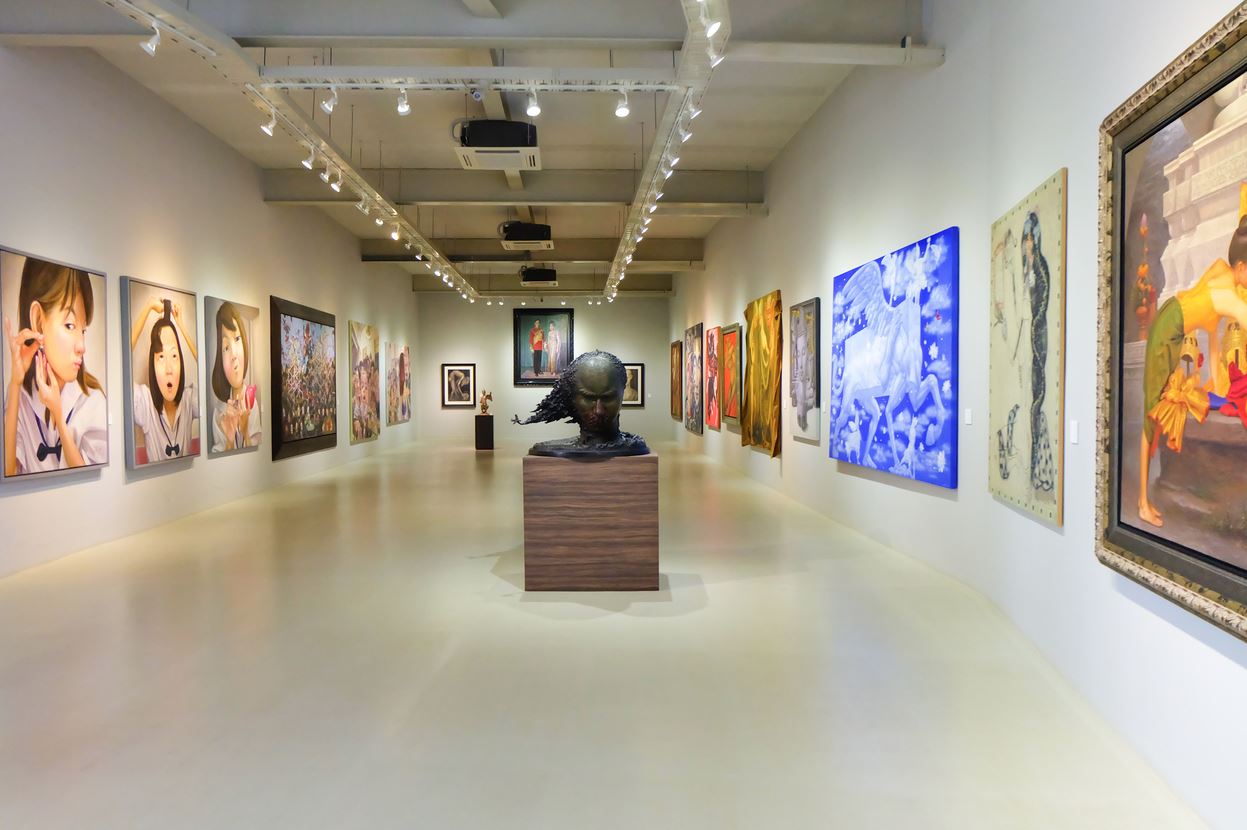
Art curation transforms silence into dialogue and space into meaning
The Invisible Hand Behind the Frame
When visitors step into a gallery, they often see paintings, sculptures, and installations as isolated creations, yet every detail of their arrangement is the result of deliberate orchestration. The curator works as an interpreter, translating the artist’s vision into an experience that can be collectively understood. Their choices shape how emotion flows through space. A well-curated exhibition does not shout its intent, it whispers it through light, distance, and juxtaposition. The invisible hand of the curator guides the gaze, controls the rhythm of perception, and builds narrative from fragments. To curate art is to compose silence and motion together, crafting an encounter that invites both discovery and introspection.
Curators exist between creation and audience, occupying a space of mediation. Their task requires empathy for both sides. They must respect the artist’s vulnerability while anticipating the viewer’s curiosity. This balance transforms them into storytellers who do not write with words but with placement and contrast. A painting positioned beside a sculpture can alter the mood of both, just as lighting can shift interpretation from serenity to tension. Through subtle arrangement, curators create harmony where chaos could reign, and in doing so, they become co-authors of meaning, writing with the architecture of the room itself.
The Origins of the Modern Curator
The word curator originates from the Latin term “curare,” meaning “to care.” This simple root reveals the essence of the role. Before the rise of modern museums, curators were caretakers of collections, stewards rather than storytellers. They managed cabinets of curiosity filled with objects from distant lands, scientific specimens, and religious relics. These early collections reflected human desire to understand and possess the world. As art institutions evolved, the curator’s responsibilities expanded from preservation to interpretation. The shift marked the birth of curation as a creative discipline rather than mere administration.
By the nineteenth century, public museums had become temples of knowledge. Curators assumed roles as educators, arranging exhibitions to communicate cultural values. In the twentieth century, their identity transformed again, influenced by conceptual art and global discourse. No longer neutral caretakers, they became collaborators and critics. The modern curator acts as both architect and philosopher of the visual. They design experiences that challenge conventional boundaries, exploring the social, political, and emotional dimensions of art. Their work no longer hides behind walls, it stands at the forefront of cultural dialogue, shaping how societies remember and reimagine themselves.
The Dialogue of Objects and Space
In a curated space, artworks speak to one another even when separated by centuries or style. A curator listens to those unspoken conversations and arranges them into coherence. Placement is not arbitrary. It is an act of translation that transforms static objects into living relationships. The distance between two works can evoke harmony or conflict. The angle of light can elevate one texture while concealing another. Every decision carries consequence. The best exhibitions allow objects to breathe, maintaining rhythm and pause like music. Visitors move through this choreography, unaware that they are following a carefully constructed sequence designed to reveal meaning gradually.
Space becomes the silent participant in this dialogue. Its dimensions, color, and acoustics affect how art is perceived. Curators learn to read rooms as though they were canvases. They experiment with tension between openness and intimacy, deciding whether to invite crowds or solitude. A minimalist gallery may encourage meditation, while a dense salon-style display evokes abundance and nostalgia. The dialogue of objects and space depends on trust, trust that the viewer will see connections without explicit instruction, and trust that the artworks will reveal their voices when given the right surroundings.
The Ethics of Representation
Every exhibition is an act of power. The curator decides what is shown, what is hidden, and how narratives are framed. These decisions carry ethical weight, for they shape public understanding of history and identity. In recent decades, the field of curation has faced growing scrutiny over inclusion and representation. Whose stories are being told, and whose are omitted? Museums once served as instruments of colonial pride, displaying artifacts without context. Modern curators now confront that legacy, striving to transform institutions into spaces of dialogue rather than dominance. They aim to return dignity to objects and voice to cultures once silenced by display.
Ethical curation demands humility. It requires acknowledging bias, confronting discomfort, and inviting collaboration. Some curators work directly with communities whose heritage is exhibited, ensuring authenticity and respect. Others challenge institutional norms by curating exhibitions that question the nature of ownership itself. Ethics in curation is not a static checklist but an evolving practice of awareness. It recognizes that every choice carries consequence, and that the act of arranging art can either perpetuate exclusion or cultivate empathy. The curator’s responsibility extends beyond aesthetics into the moral architecture of cultural memory.
The Curator as Storyteller
A successful exhibition reads like a narrative without words. It begins with curiosity, builds tension, and resolves with reflection. The curator constructs this story not by addition but by restraint. Each artwork chosen must contribute to the rhythm of understanding. Too many voices and the story loses clarity. Too few and it risks monotony. The storytelling curator weaves time and emotion together, guiding the visitor through an unfolding sequence that alternates between revelation and rest. The walls become pages, the lighting punctuation, and the pathway the plot.
Every exhibition carries its own tone. Some whisper through minimalism, others sing with grandeur. A curator learns to modulate mood through visual tempo. Repetition can create emphasis, contrast can create surprise. Just as a writer edits drafts, curators revise layouts until the emotional cadence feels right. They anticipate where viewers will pause, where they will question, and where they will feel awe. The process transforms the gallery into a narrative landscape, one where art ceases to be isolated and instead becomes part of a collective voice that speaks of humanity, imagination, and time.
The Archive as Memory
Behind every exhibition lies the hidden world of archives. Stored away from public view, these collections form the backbone of curatorial practice. They preserve not only artworks but the documents, sketches, and correspondences that reveal context. To curate from an archive is to excavate memory. The curator acts as an archaeologist of intention, uncovering fragments that once shaped creative decisions. These materials provide depth to interpretation, grounding the visible in the invisible. An exhibition without archival insight risks being surface alone. With it, art becomes dimensional, enriched by its lineage of creation and preservation.
The archive is also a site of imagination. Within its drawers and folders lie forgotten voices waiting to be reintroduced. Curators often describe the thrill of discovery when an overlooked letter or sketch redefines understanding of a masterpiece. In this way, the archive functions as both history and possibility. It preserves what has been and hints at what might yet be revealed. To engage with it is to engage with time itself. The curator who tends the archive performs a quiet act of devotion, ensuring that memory remains intact even as interpretation evolves.
The Collaboration Between Artist and Curator
Though the curator may seem to hold authority, the relationship with the artist is collaborative at its best. Each contributes distinct sensibilities. The artist creates worlds, and the curator constructs the environment in which those worlds can resonate. Mutual respect transforms this partnership into dialogue rather than hierarchy. Curators learn to interpret without imposing, to enhance without overshadowing. When collaboration succeeds, exhibitions transcend both intention and interpretation, becoming shared acts of creation. The result is a symphony where both voices remain distinct yet harmonized.
Collaboration also challenges the boundaries of authorship. Some contemporary artists integrate the curatorial process into their work, blurring distinctions between creation and display. Others design installations that respond dynamically to the curator’s spatial vision. This exchange demonstrates that art curation is not secondary labor but a form of artistry in its own right. The exhibition becomes a co-authored text written through negotiation, trust, and experimentation. Such relationships remind audiences that art, in all its forms, thrives on interaction rather than isolation.
The Evolving Language of Display
As technology reshapes perception, the language of curation continues to evolve. Virtual exhibitions, digital archives, and interactive installations have expanded the possibilities of experience. The curator now operates not only in physical rooms but across networks of screens. This shift introduces both opportunity and tension. Digital platforms allow global accessibility yet risk detaching art from its material presence. The challenge lies in preserving intimacy amid abundance. The curator’s task becomes one of translation, converting tactile experience into digital encounter without losing emotional weight.
Contemporary curation also embraces interdisciplinarity. Boundaries between visual art, sound, performance, and technology blur into hybrid expressions. Curators serve as navigators of this expanding field, crafting exhibitions that mirror the complexity of modern culture. The language of display becomes experimental, fluid, and responsive. Yet at its core remains the same impulse that guided early caretakers: to care for the encounter between viewer and creation. The evolution of curation is not replacement but renewal, an ongoing dialogue between form and feeling that adapts as humanity itself changes.
The Space That Teaches Us to See Again
When visitors leave a gallery, they carry more than images in their minds. They carry a renewed awareness of perception itself. The true success of curation lies in this transformation. A well-curated space teaches people how to see again, how to pause and notice the invisible threads between object and meaning. It reawakens sensitivity dulled by distraction. The curator’s invisible labor thus becomes a quiet act of education, reminding us that art is not confined to frames or walls. It extends into the way we observe the world. Through curation, the ordinary gains clarity, and silence becomes eloquent. The rooms that teach us to see remain with us long after we have stepped outside, guiding our gaze toward beauty waiting patiently in everything we encounter.