
The Craft, Science, and Aesthetics Behind Ceramic Art
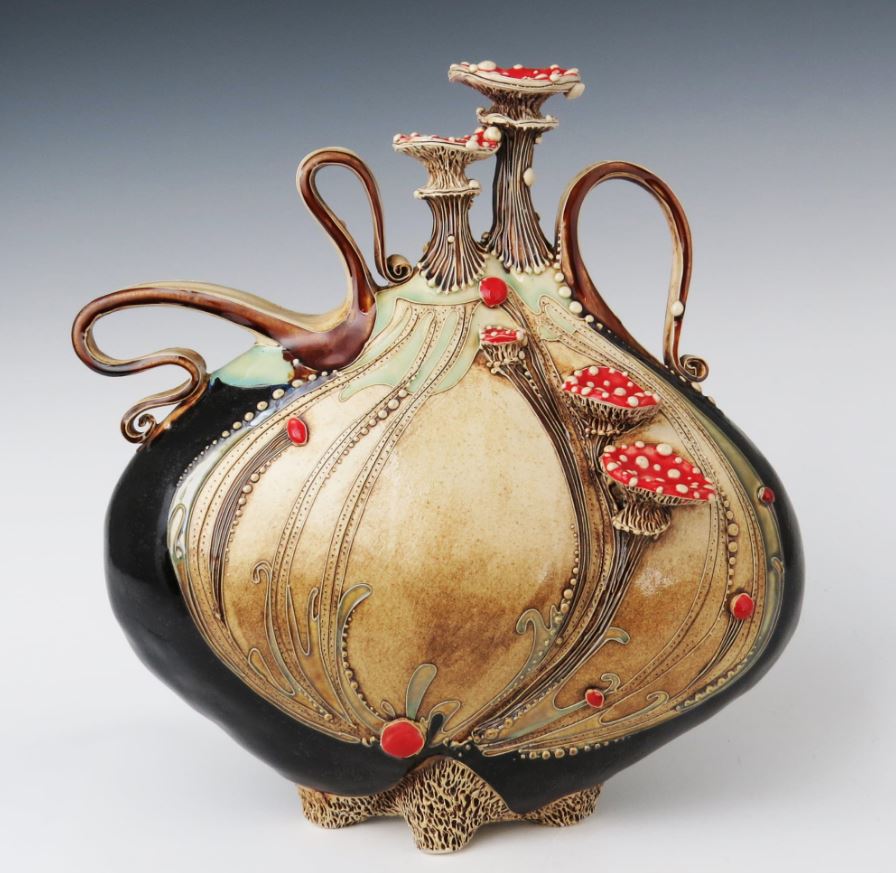
The conversation between earth, fire, and imagination within the enduring world of ceramic art
The Birth of Form from Earth
Ceramic art begins in the most humble of places: the soil beneath our feet. What makes it extraordinary is not the material itself but the transformation it undergoes through human hands and elemental forces. Clay, in its raw state, is pliant and unassuming. It yields to every press of the finger, recording movement and intention with delicate honesty. When shaped, dried, and finally kissed by fire, it becomes stone, an alchemy of patience, precision, and surrender. This act of turning earth into art is one of the oldest human rituals, tracing back over twenty thousand years. From early vessels used for carrying grain to ornate sculptures that told stories of gods and ancestors, ceramic art has always existed at the meeting point of necessity and beauty.
To touch clay is to engage in dialogue with time. It carries the memory of rivers, the pressure of centuries, and the rhythm of the maker’s breath. Artists who work with it often describe the process as meditative, even spiritual. The clay resists and cooperates in equal measure, teaching balance and restraint. Every curve, every indentation, becomes a visible record of this negotiation. When heat finally seals these gestures into permanence, the object becomes both artifact and witness. Through ceramic art, humanity leaves its fingerprints upon the planet, shaping impermanence into endurance.
The Echo of Ancient Kilns
The story of ceramic art cannot be told without acknowledging the civilizations that refined it. Ancient China’s porcelain, Japan’s raku ware, Greece’s painted amphorae, and Persia’s lusterware each represent epochs of innovation. Every culture discovered its own way to converse with clay, creating aesthetics that mirrored its philosophy and beliefs. The invention of the kiln was a turning point. It allowed control over heat, enabling finer detail, deeper color, and stronger form. What began as rudimentary fire pits evolved into architectural marvels capable of sustaining extreme temperatures, turning ordinary minerals into vessels of light and color. Each firing was both science and ceremony, an offering to forces beyond understanding.
Archaeologists often uncover shards of pottery where entire cities have vanished. These fragments become time’s most eloquent storytellers. They speak of trade, ritual, and identity. A simple bowl can reveal how people ate, celebrated, and mourned. It captures not only aesthetic trends but daily rhythm. In this sense, ceramic art is civilization’s diary written in glaze and heat. Every crack, every variation in color, tells us how humans once lived in conversation with the earth. The survival of these fragments is itself a miracle. While empires crumble, clay endures. It is both fragile and immortal, an artifact of both creation and destruction.
The Hand and the Wheel
The potter’s wheel changed the story of ceramics forever. It introduced rhythm into craftsmanship, transforming what once required static molding into a dance between motion and control. The circular symmetry of wheel-thrown vessels reflects not only mechanical advancement but philosophical depth. The act of centering clay teaches discipline and humility. To find balance on the wheel, one must align hand, mind, and breath. Each imperfection that arises is an invitation to learn, to listen to the material rather than impose upon it. Many artisans describe this process as an extension of self, where time ceases and thought dissolves into motion.
Even today, in an age of automation, the potter’s wheel retains its sacredness. It is a reminder that art is not just outcome but experience. Watching clay rise beneath spinning fingers is witnessing transformation in real time. The symmetry achieved through motion feels almost organic, as though the earth itself is learning to move in circles. In workshops across the world, the wheel remains a place of meditation and discipline. It demands presence, rewarding those who listen. The harmony between rotation, resistance, and release defines not just ceramic art but the rhythm of creation itself.
The Chemistry of Fire and Glaze
Few moments in art are as suspenseful as opening a kiln. The artist stands before it like a witness to revelation, uncertain of what the fire has chosen to reveal. Glaze chemistry is a language of unpredictability, shaped by temperature, mineral reaction, and atmosphere. Copper may bloom into green or flash into red. Iron can darken to bronze or lighten to amber. Each piece emerges from the kiln transformed, bearing marks that cannot be replicated exactly. This element of chance is part of ceramic art’s allure. It invites humility, reminding the artist that control is an illusion. Fire is both collaborator and judge.
Historically, glazes evolved from practical necessity, sealing porous surfaces to hold water. Over centuries, they became a medium of expression. Artisans discovered how to layer minerals for opacity, sheen, or translucence. Some glazes flow like rivers, others freeze mid-motion, creating textures that invite touch. The Japanese concept of wabi-sabi, the beauty of imperfection, found perfect embodiment here. A misfire, a drip, or a crack could become poetry. Modern ceramicists continue this exploration, combining traditional recipes with scientific experimentation. They chase new hues, test atmospheres, and seek the fine line where chaos turns to elegance. In the heart of every kiln, chemistry and faith converge.
The Sculptural Spirit of Clay
While pottery often defines ceramic art in popular imagination, sculpture expands its boundaries into abstraction and storytelling. Artists use clay not just to hold but to speak. Sculptural ceramics explore emotion, anatomy, landscape, and imagination in forms that defy utility. The material’s flexibility allows for both monumental and delicate expression. Contemporary artists blend hand-building, casting, and carving to create works that question perception and provoke reflection. Some capture fleeting gestures, others monumental stillness. Through clay, they translate inner worlds into tangible presence. The result bridges craft and fine art, challenging the division between them.
In modern galleries, ceramic sculpture often surprises viewers who expect fragility but encounter strength. Fired clay, though brittle, carries a gravitas that transcends its material. It anchors space with quiet weight, commanding attention through stillness. Artists like Magdalene Odundo and Betty Woodman redefined the medium by merging ancient forms with contemporary abstraction. Their work demonstrates that clay, though ancient, remains endlessly renewable in meaning. It absorbs influences, adapts to new philosophies, and continues to ask old questions about humanity’s relationship with creation. The sculptural spirit of ceramic art lies not in imitation of life but in giving form to the unseen.
The Collector’s Eye for Clay
Collectors of ceramic art do more than preserve objects, they curate continuity. Each acquisition reflects an encounter with history, craftsmanship, and emotion. Unlike other art forms, ceramics engage multiple senses. Their texture invites touch, their weight speaks of gravity, and their surface catches light in unpredictable ways. Collectors often describe their relationship with ceramics as personal rather than transactional. A bowl or sculpture might evoke a specific mood, a cultural resonance, or a tactile memory. In this way, collecting ceramics becomes an act of empathy. It recognizes the maker’s labor and the material’s story.
The market for ceramic art has evolved significantly in recent decades. Once confined to craft fairs and academic circles, it now occupies a respected place in galleries and museums. The boundary between functional and conceptual work continues to blur. Collectors who understand this duality appreciate ceramics not only for beauty but for meaning. They see in each glaze variation and contour a dialogue between artist and element. The best collections feel cohesive not because of uniformity but because of shared philosophy. They celebrate the diversity of clay’s expression while acknowledging its singular origin. In collecting ceramics, one collects fragments of humanity itself.
The Modern Renaissance of Ceramic Expression
In recent years, ceramic art has experienced a revival unlike any in its long history. Digital fatigue and industrial uniformity have renewed appreciation for the handmade. Artists and enthusiasts alike turn to clay for its honesty and tactility. Social media has amplified this movement, allowing potters and sculptors to share process as much as product. The result is a new generation of creators who embrace both tradition and innovation. They use ancient techniques alongside 3D printing and experimental glazes, bridging millennia of craft in a single gesture. This renaissance is not nostalgic but forward-looking. It reaffirms that ceramics remain as relevant as ever in expressing human connection to material and environment.
Educational institutions have also rekindled interest in ceramics as fine art. Students study glaze chemistry, kiln design, and historical context with renewed curiosity. Museums dedicate entire wings to ceramics, recognizing its cultural importance. This renewed visibility has elevated both emerging artists and forgotten masters. In a world often dominated by speed and disposability, ceramic art reminds us of endurance and intimacy. Each fired piece is a meditation on transformation. In touching clay, artists rediscover their own humanity, grounding themselves in the ancient rhythm of creation and renewal.
The Earth That Endures Within Us
At its core, ceramic art teaches us that transformation is a universal language. It mirrors life itself, shaped by pressure, refined by heat, and preserved through care. The beauty of a vessel or sculpture lies not in perfection but in its dialogue with impermanence. Clay begins as earth and returns to it, yet within that cycle, it captures human intent in lasting form. To hold a ceramic object is to hold time made visible. Its surface, its weight, and its silence remind us that art does not need to shout to be eternal. It endures quietly, just like the soil it came from, teaching us that even the simplest matter can carry infinite grace.