

The Cards That Remember Everything
The timeless allure of trading cards as windows into nostalgia, art, and human connection
The First Shuffle of Memory
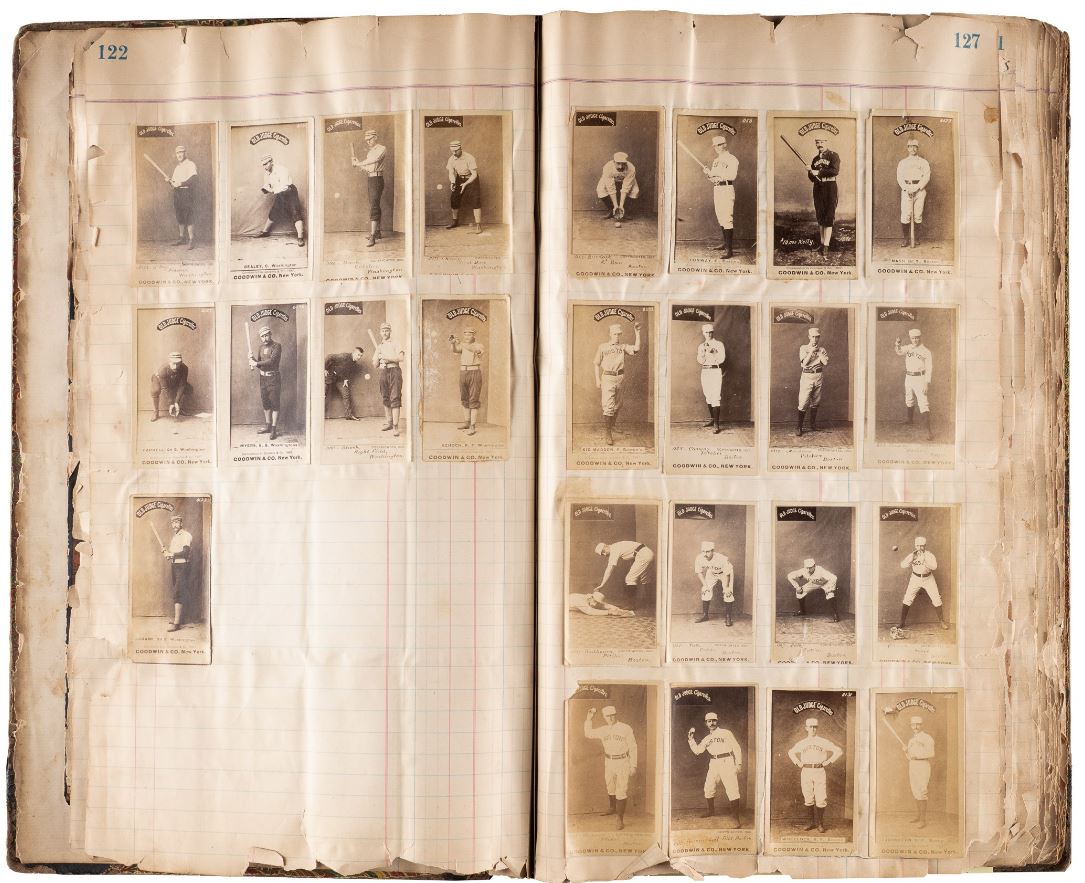
There are few objects as deceptively simple as a trading card. A rectangle of paper or glossy stock, often palm-sized, printed with an image and a few lines of text. Yet within that small frame resides a century of fascination, culture, and obsession. Trading cards have always existed at the intersection of play and preservation, turning mass production into intimacy. The first widely recognized sets emerged in the late nineteenth century, often distributed by tobacco companies to stiffen packaging and entice buyers. They depicted athletes, actresses, flags, and wildlife, serving as both entertainment and advertisement. What began as marketing ephemera soon evolved into a medium of memory. Each card became a vessel of identity, a token that connected the mundane with the mythic.
From that early moment, trading cards took on a dual nature. They were collectible but also expendable, personal yet universal. Children exchanged them, adults archived them, and each generation assigned its own meaning to their glossy surfaces. A card might be a talisman of youth, a symbol of fandom, or a record of history. The act of collecting, cataloging, and trading them gave rise to a culture that blurred the line between hobby and devotion. The smallness of the card belied its significance. Within its borders, people found both reflection and escape, a tangible link to a world larger than themselves.
Cardboard Mythologies
To understand the true power of trading cards, one must see them not as objects but as myths printed in miniature. A baseball card is never just a photo of an athlete in mid-swing. It is a snapshot of hope, potential, and fleeting glory. A Pokémon or Magic: The Gathering card is not merely a piece of gameplay material. It is a portal to a shared imagination, a universe made tangible through ink and numbering. Each card tells a story, but together they form mythologies, structured worlds governed by rarity, hierarchy, and lore. Collectors participate not just in ownership but in authorship, constructing meaning through the patterns they assemble.
This mythology grows with time. When a child in 1952 pulled a Mickey Mantle rookie card from a pack, it was a moment of play. Decades later, the same card became an artifact, a priceless piece of cultural archaeology. Time transforms ordinary objects into sacred ones. The trading card thus exists in two realms: the immediate joy of discovery and the eternal weight of memory. Its mythology thrives because it mirrors the human need to collect meaning, to impose order on chance. Every shuffle of cards is an echo of this ancient impulse, to find significance in the arbitrary, to turn randomness into story.
The Ritual of the Collector
Every collector of trading cards participates in a ritual that blends patience, curiosity, and reverence. The ritual begins with touch: the crinkle of a pack opening, the soft slide of cards across fingertips, the quickened pulse as an image reveals itself. For some, it is the thrill of the rare pull, the pursuit of a limited edition. For others, it is the slow satisfaction of completion, the moment a missing piece finally joins the mosaic. This ritual is solitary yet communal, intimate yet endlessly shared. It bridges generations and cultures because it speaks to a universal truth: the joy of finding something that feels both ordinary and extraordinary at once.
The collector’s journey is never static. It evolves with the person who undertakes it. What begins as playful accumulation often deepens into curation, a conscious act of preservation. Albums replace shoeboxes, sleeves replace stacks, and knowledge replaces impulse. The collector learns the languages of rarity and condition, print run and provenance. Yet beneath all this expertise lies a heartbeat of nostalgia. To collect cards is to collect fragments of self, childhood afternoons, friendships formed in trade, dreams once imagined. It is not just about having but about remembering. The ritual endures because it honors both the act of discovery and the passage of time.
The Art Hidden in Plain Sight
Beyond their collectible value, trading cards are an art form often overlooked. Each one represents the labor of photographers, illustrators, and designers who balance aesthetic with economy. The constraints of size force creativity. In the space of a few inches, an artist must convey drama, motion, or emotion. Sports cards transform athletes into icons, capturing moments that feel eternal. Fantasy cards render imaginary worlds with the precision of fine art, their compositions filled with symbolism and light. Even modern trading cards that merge photography and digital effects continue a lineage of visual storytelling that began centuries earlier with portraiture and engraving.
The design of a trading card operates as both narrative and architecture. Borders frame meaning, typography speaks hierarchy, and color directs attention. Some cards are minimalist, letting space breathe around the subject. Others are baroque, layering foil, texture, and holographic patterns to create spectacle. The collector’s delight lies partly in this diversity of design. Each card, whether mass-produced or hand-sketched, holds the fingerprint of its creator. For artists, the trading card offers a unique challenge: to create lasting impact on a canvas smaller than a photograph, to craft beauty that fits between two fingers yet lingers in memory forever.
The Economics of Rarity and Desire
In the modern era, trading cards have become not just collectibles but commodities. Markets thrive on rarity, and scarcity fuels desire. A misprinted card, an autographed insert, or a first edition can command astronomical prices. Collectors monitor auctions with the same intensity as stock traders, aware that value fluctuates with cultural trends and personal nostalgia. Yet the economy of trading cards is not purely financial. It is emotional, psychological, and even philosophical. The desire for possession stems from more than greed; it is about control, validation, and connection to history.
However, the monetization of collecting introduces paradox. The card meant to be touched becomes untouchable, sealed in acrylic cases, graded by numeric scales. Authenticity is measured in minutiae: corner sharpness, color saturation, centering. This commodification transforms memory into investment. Some lament this shift, fearing that value has replaced wonder. Yet others argue that it ensures preservation, that the same impulse to protect value also protects heritage. The balance between emotion and economy defines the modern collector’s dilemma. What began as a child’s pastime now moves millions, yet the essence remains unchanged, a longing for meaning within a small rectangle of art and memory.
The Digital Evolution of the Tangible
The arrival of the digital age introduced both challenge and opportunity to the world of trading cards. Non-fungible tokens, or NFTs, replicated the idea of ownership and rarity within virtual space. Digital cards could be minted, traded, and verified without ever existing physically. For some collectors, this represented liberation, the removal of decay, damage, and storage constraints. For others, it felt like loss, a severing of the tactile bond that gave the hobby its soul. Yet even in the digital sphere, the essential mechanics remained: scarcity, artistry, and story. The collector’s psychology adapted seamlessly. The act of opening a virtual pack still triggered anticipation; the thrill of rarity still ignited the imagination.
Rather than replacing physical cards, digital versions expanded the ecosystem. Hybrid collections emerged, where tangible and virtual coexist. Augmented reality allowed cards to come alive, merging play and technology in new forms. The evolution of the trading card reflects the adaptability of human passion. Whether printed on cardboard or coded in blockchain, the impulse remains the same: to collect, to connect, and to preserve identity through the act of curation. The medium evolves, but the message endures. In every format, trading cards remain evidence of our need to turn imagination into something we can hold, or at least, something we can believe we hold.
The Psychology of Nostalgia and Belonging
Every collector eventually discovers that what they are truly collecting is not cards but memories. Nostalgia forms the invisible glue that binds the hobby together. A person who buys a pack of cards as an adult is often trying to touch the past, to reenter a moment when joy was simple and discovery pure. The smell of ink, the gloss of new prints, the faint crackle of packaging, these sensations evoke entire eras. Trading cards, in this way, are emotional time machines. They connect individuals not only to childhood but to community. They bridge generations through shared enthusiasm, passing traditions of care and curiosity from parent to child, friend to friend.
Belonging plays an equal role. Card shows, conventions, and online forums become spaces of kinship where collectors share stories and celebrate rarity together. The act of trading reaffirms connection. It is negotiation, but also trust. Each exchange carries both material and emotional weight. In a fragmented world, such rituals of exchange restore continuity. They remind us that collecting is not about isolation but communion. Behind every card lies a network of hands and hearts, a global conversation spoken in the language of care, curiosity, and shared wonder.
The Collector as Historian
Collectors often become accidental historians. Through the preservation of cards, they archive visual culture, fashion, and even ideology. A set of baseball cards from the 1950s tells not just the story of sports but of printing technology, advertising aesthetics, and national sentiment. A collection of trading game cards reveals the evolution of design philosophy, player psychology, and cultural mythology. In this way, the collector serves as an unofficial archivist, safeguarding fragments of collective memory that institutions may overlook. Their shelves and binders become living museums where personal and public history intersect.
Some collectors dedicate their lives to building comprehensive archives that outlast them, donating their collections to museums or universities. Others prefer to remain private custodians, knowing that their care ensures continuity. In both cases, the act of collecting transcends self-interest. It becomes stewardship. The trading card, once ephemeral, gains permanence through attention. It tells future generations how we saw ourselves, what we admired, what we feared, and what we chose to remember. In the collector’s careful hands, the transient becomes timeless, and the simple act of preservation becomes an art in itself.
The Deck That Outlives Us
In the end, trading cards are less about accumulation than about continuity. They carry forward stories, aesthetics, and affections that might otherwise fade. A card’s lifespan often exceeds its creator’s, passing through hands and decades as a quiet testament to care. The collector knows this, consciously or not. Every card sleeved, every binder filled, every set completed is an act of legacy. When viewed together, they form a deck that tells humanity’s shared narrative of play, memory, and imagination. The beauty of the trading card lies in its contradiction, it is fragile yet enduring, small yet immense, ordinary yet sacred. It reminds us that meaning does not depend on scale, and that even a slip of cardboard can hold the full gravity of time. Within that truth, the collector finds peace, and the collection, no matter how large or small, becomes eternal.