

In the Shadow of the Fossil Hunter’s Path
Uncovering the ancient dialogue between life, time, and curiosity through the art and devotion of fossil hunting
The First Glimpse Beneath the Surface
Every fossil hunter remembers their first discovery, not because of the object itself but because of the moment the past revealed itself. To find a fossil is to encounter silence that has lasted for millions of years. Beneath layers of stone and sediment lie traces of existence, frozen mid-motion. A simple imprint of a fern, the spiral of an ammonite, or the fragment of a bone becomes a conversation between worlds separated by unimaginable time. The act of uncovering such relics feels less like discovery and more like remembrance, as though the earth itself were whispering the story of what once was. Fossil hunting, at its heart, is not about collecting. It is about listening to what the planet has tried to preserve.
The process begins in landscapes that seem ordinary until the eye learns their language. Hills, quarries, cliffs, and riverbeds become libraries written in stone. Each stratum holds its own era, layered like the pages of a book written in geological script. The hunter, armed with patience, picks and brushes not merely to find but to understand. Fossil hunting trains perception. It requires reverence for detail, an appreciation for texture, and a sense of wonder that bridges science and spirituality. To kneel before a rock and coax from it the remains of an ancient shell is to engage with time itself, one fragment at a time.
The Origins of Curiosity and Discovery
The fascination with fossils predates modern science. Long before paleontology had a name, people found strange shapes embedded in stone and sought meaning in them. In ancient Greece, fossilized shells discovered far inland were seen as evidence of great floods. In China, dragon bones unearthed from the earth were ground into medicine. Medieval Europeans believed petrified fish were remnants of divine punishment or miracles. Every civilization attempted to interpret these mysterious forms within its worldview. It was only in the Age of Enlightenment that these relics were understood as remnants of life, not myth.
The earliest fossil hunters were often natural philosophers and adventurers. They ventured into cliffs and caverns not for wealth but for understanding. With crude tools and little guidance, they uncovered skeletons that challenged religious and scientific doctrines alike. The idea that species could vanish, that life had existed before humanity, was once revolutionary. Fossil hunters became accidental revolutionaries, unearthing truths that altered how humanity perceived its place in creation. Their curiosity redefined history, proving that the earth itself was a record keeper, and its fossils were the signatures of vanished worlds.
The Anatomy of Patience
Fossil hunting rewards those who understand the rhythm of patience. It is not a pursuit of immediacy but of endurance. Hours may pass without discovery, yet every minute spent searching is part of a larger meditation. The hunter must read the landscape like a text, learning to see patterns in randomness, to notice the faint curve that betrays a shell, or the subtle difference between stone and bone. Every swing of the pick, every sift through dust, becomes ritual. The earth yields its secrets reluctantly, but with grace to those who wait.
Patience is not passive. It is an active form of observation. Fossil hunters cultivate an intimacy with the terrain. They study erosion, weather, and the geological history of a site. They learn to anticipate where ancient rivers once flowed or where volcanic ash may have entombed creatures in seconds. When a fossil finally reveals itself, the reward is not just the object but the affirmation that persistence has bridged millions of years. It is in that moment that time collapses. The hunter is no longer simply a visitor but a participant in the planet’s ongoing conversation with itself.
The Tools of the Time Traveler
The equipment of a fossil hunter may appear simple, yet each tool carries significance. The hammer and chisel are extensions of sensitivity, not aggression. The brush is not merely for cleaning but for revealing without harming. Even the smallest movement must balance curiosity with care. The ideal fossil hunter works like an archaeologist of moments rather than monuments, understanding that damage to a single edge can erase irreplaceable data. In fossil hunting, precision is compassion.
Modern fossil hunters use technology alongside traditional methods. Ground-penetrating radar, drones, and 3D scanning have expanded the boundaries of exploration, allowing discoveries in regions once deemed inaccessible. Yet despite these advances, the essence remains the same. Whether one is kneeling in a desert with a pick or analyzing a digital model in a laboratory, the experience is one of connection. Technology may enhance vision, but it cannot replace the human sense of awe that comes from unearthing the trace of a creature that once walked beneath ancient skies. The tools may evolve, but the soul of the search remains timeless.
The Thrill of Recognition
There is a particular electricity in the moment of recognition. A fossil hunter learns to distinguish between false hope and true find, between the deceptive shapes of mineral patterns and the unmistakable geometry of life. The heart accelerates not at the sight of treasure but at the realization of presence. The pattern before you, embedded in silence, once pulsed with movement. It belonged to a creature that lived, breathed, and died long before the first human stood upright. That awareness transforms the discovery into communion. The fossil ceases to be an object and becomes a witness.
Recognition also deepens humility. Fossil hunters understand how fragile discovery can be. For every bone uncovered, countless others remain hidden or lost forever. The hunter is always aware of their place in a chain of chance. Rain may expose a bone; a gust of wind may reveal a pattern. Nature participates in the process, guiding discovery in ways that feel almost deliberate. In this shared act of unveiling, the fossil hunter becomes collaborator rather than conqueror. The past reveals itself, not because we demand it, but because we approach with respect.
The Ethics of Preservation
Every fossil carries dual identity: scientific specimen and cultural treasure. The ethics of fossil hunting revolve around respect for both. True collectors know that to take without understanding is to rob the world of knowledge. A fossil, once removed from its geological context, loses part of its story. Responsible hunters record exact locations, orientations, and conditions before extraction. These details allow scientists to reconstruct environments and trace evolution. Without them, the fossil becomes silent decoration, stripped of meaning.
Legal and ethical frameworks now protect many fossil-rich areas, balancing curiosity with conservation. Some regions allow public fossil hunting under regulation, encouraging education and stewardship. Others restrict excavation to professionals to prevent damage. The dialogue between enthusiasts and experts continues, rooted in shared passion for preservation. What unites both is recognition that fossils are not property but legacy. They belong to time more than to individuals. To collect them responsibly is to participate in an act of guardianship, an agreement between humanity and history to preserve what the earth entrusted to us.
The Human Narrative in Stone
Each fossil is a fragment of a larger narrative that connects all life. Through them, we trace our own ancestry, not just biological but existential. The same forces that shaped ancient organisms shaped us. The discovery of transitional fossils, like the archaeopteryx or early hominid remains, has shown that the line between past and present is porous. Fossils are not simply remnants of extinction but evidence of transformation. They remind us that life adapts, survives, and evolves. For many collectors, that realization adds depth to the act of collecting. The fossil becomes a mirror through which we see both the persistence and fragility of life.
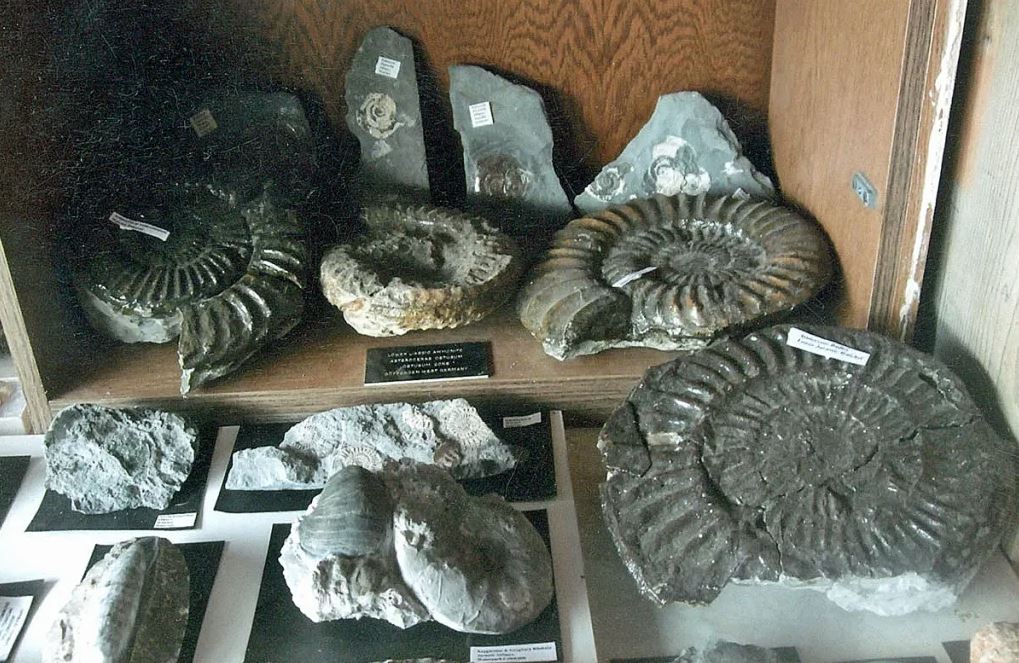
Fossil hunting also unites art and science. Each specimen is a sculpture created by nature and time. The spiral of an ammonite or the symmetry of a trilobite carries aesthetic perfection equal to any human creation. To display fossils is not to glorify death but to celebrate endurance. Their forms speak of balance, adaptation, and beauty. In museums and private collections alike, fossils serve as both evidence and inspiration. They remind us that creation did not end but continues, layer by layer, in the slow artistry of the earth.
The Modern Renaissance of Discovery
Today, fossil hunting enjoys a revival fueled by accessibility and global connection. Amateur paleontologists share discoveries online, while communities organize expeditions that blend adventure with education. Sites once known only to experts now host visitors eager to experience the thrill of deep time. The democratization of knowledge has expanded the field, allowing more people to contribute to scientific understanding. Some of the most significant finds in recent years have come from ordinary enthusiasts whose passion led them to extraordinary discoveries. This collective curiosity reflects a broader truth: the story of the earth belongs to everyone willing to listen.
At the same time, this renaissance demands responsibility. As interest grows, so does the need for awareness about conservation, legality, and ethics. The future of fossil hunting depends on balance, between exploration and preservation, between excitement and respect. The modern fossil hunter must combine wonder with wisdom, ensuring that what they uncover remains not only seen but understood. In this harmony lies the future of paleontological discovery: an alliance of curiosity, technology, and care.
The Earth’s Memory in Our Hands
Fossil hunting, at its deepest level, is not about possession but participation. It is an act of remembrance performed with patience and reverence. When a hunter lifts a stone and finds within it the outline of a leaf or the curve of a shell, they are holding a story written before language. That story, though ancient, still speaks. It tells of movement, survival, and transformation. To listen to it is to acknowledge that we, too, are part of the same cycle. The fossils we find are not relics of death but evidence of continuity. They are the earth’s handwriting, preserved for those who care enough to read. In our hands, the past becomes present, and the stones that remember breath continue to teach us how to live within time rather than above it.